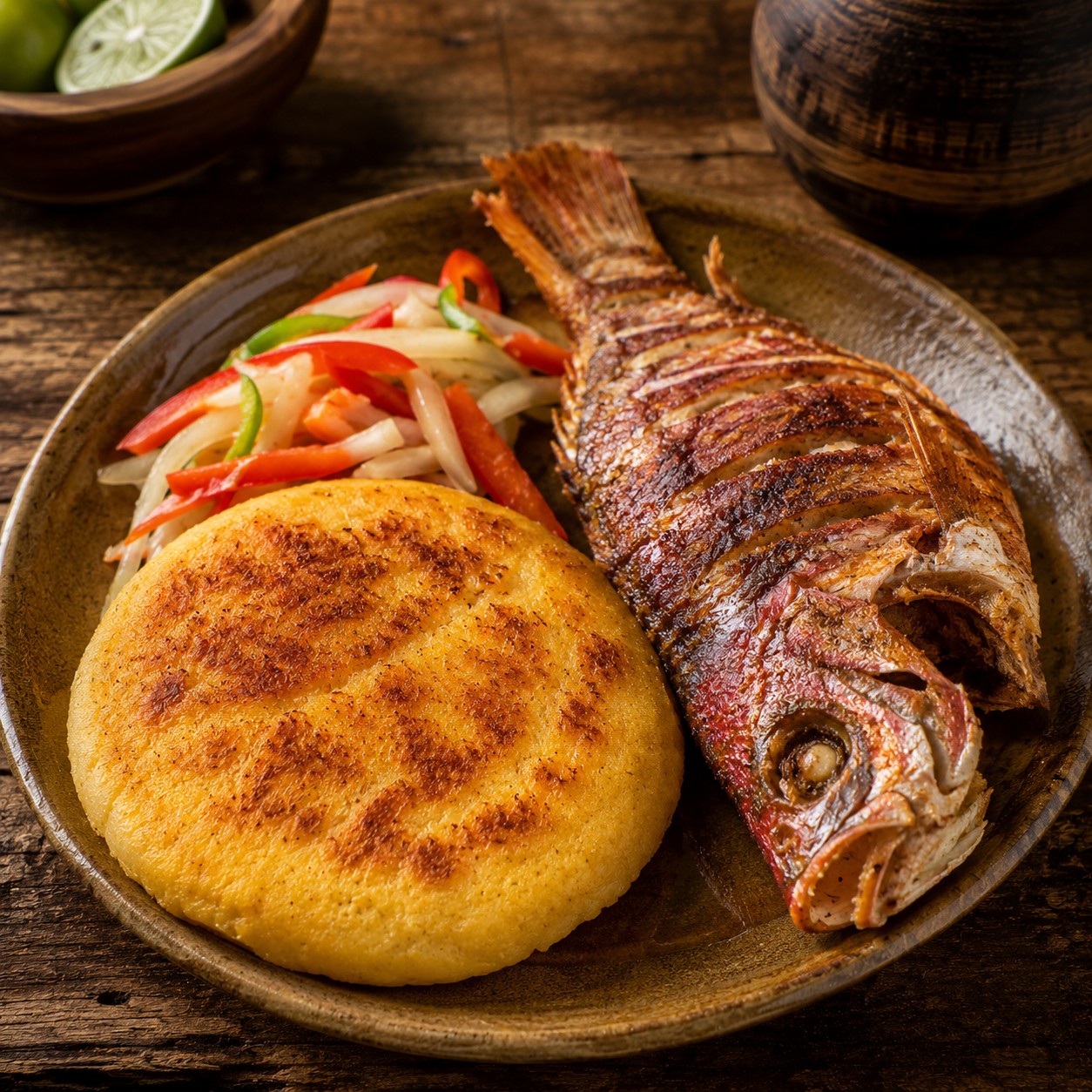
Bammy is one of Jamaica's oldest foods — a cassava flatbread that predates Columbus, made by the island's Taíno people. Grated cassava is pressed into rounds and cooked, then soaked in coconut milk and fried or grilled until golden. It's the traditional side for escovitch fish.
Ingredients
- 2 cups grated cassava, squeezed very dry
- ½ tsp salt
- 1 cup coconut milk (for soaking)
- Oil for frying
Method
- Peel and grate the cassava, then squeeze it as dry as you can in a clean cloth (this removes the bitter juice — important).
- Mix the dry cassava with salt. Press a portion firmly into a hot, lightly greased round pan or mold.
- Cook over medium heat a few minutes per side, pressing, until it binds into a firm flat cake. Repeat for each bammy.
- Soak each cooked bammy in coconut milk for 2–3 minutes so it softens and absorbs flavor.
- Fry or grill until golden brown on both sides. Serve warm with fish.
🥥 Shortcut
Pre-made bammies are sold frozen at Caribbean groceries — just soak in coconut milk and fry. Homemade is worth it, but the store version is a great everyday option.
The cassava flatbread with Taíno roots
Bammy is one of Jamaica's oldest foods — a cassava flatbread the island's Indigenous Taíno people were making long before Columbus arrived. Grated cassava is pressed to remove its liquid, formed into rounds and cooked; today it's soaked in coconut milk and fried or grilled golden, the classic partner to fried fish and escovitch.
It's a direct, delicious link to the island's earliest kitchens.
Ingredient notes & substitutions
- Cassava — freshly grated in the traditional method; many cooks buy ready-made bammy rounds and simply soak and fry them.
- Coconut milk — for soaking, which softens the bammy and flavours it.
- Salt and a little oil for frying or grilling.
🔥 Pro tips
Starting from ready-made rounds is easiest: soak them in coconut milk for 10–15 minutes so they soften and drink up the flavour, then fry or grill until golden. From scratch, the key safety step is to squeeze the grated cassava very dry — raw cassava liquid must be pressed out before the bammy is formed and cooked.
Common mistakes to avoid
- Skipping the soak. Un-soaked bammy is dry and hard.
- Not pressing out the cassava liquid (from scratch). It must be removed before cooking.
- Frying too hot and dry. Keep the heat moderate so it warms through and turns golden.
What to serve with bammy
- Escovitch fish — the classic partner.
- Ackee and saltfish or fried fish.
- Pepperpot soup for dipping.
Storage & reheating
Ready-made bammy keeps as per its packaging. Cooked bammy is best fresh but keeps 2–3 days; reheat it in a pan to bring back the golden edges.
Bammy FAQ
What is bammy made of?
Cassava (yuca) — grated, pressed dry, formed into rounds and cooked. It's a naturally gluten-free flatbread.
Do I make it from scratch or buy it?
Both are common. Pre-made bammy rounds just need soaking and frying; from scratch takes more work pressing the cassava.
Why soak it in coconut milk?
Soaking softens the dense bammy and infuses it with coconut flavour before frying or grilling.
Is cassava safe to eat?
Yes, when prepared properly. Raw cassava liquid must be pressed and cooked out, which traditional bammy-making does.
What do you eat bammy with?
Fried or escovitch fish most classically, but also ackee and saltfish or a bowl of soup.