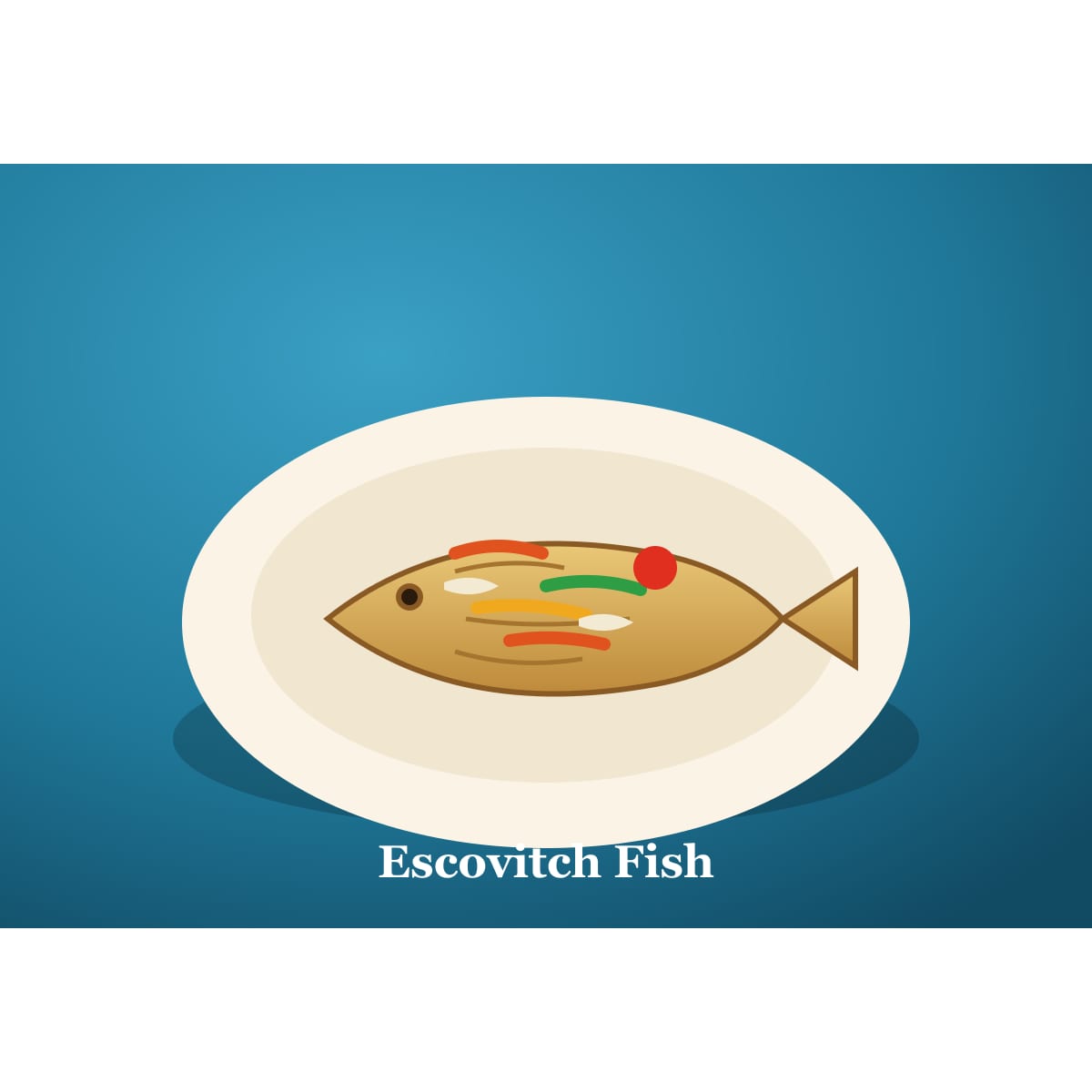
Escovitch (a cousin of the Spanish escabeche) is fried fish topped with a vinegar-pickled medley of vegetables. The hot, sharp dressing soaks into the crispy fish, balancing richness with brightness. It's a staple of Jamaican beaches and Easter tables, classically served with festival or bammy.
Ingredients
- 2 whole snapper (or 4 fillets), cleaned & scored
- 1 lime or lemon
- 1 tsp salt & black pepper
- Oil for frying
- 1 onion, sliced
- 1 carrot, julienned
- 1 sweet pepper, sliced
- 1 scotch bonnet, sliced (to taste)
- 1 cup white vinegar
- 6 pimento berries + a few thyme sprigs
- 1 tsp sugar
Method
- Wash the fish with the lime or lemon and cold water, pat thoroughly dry, and season inside and out with salt and pepper. Drying well is key to a crispy result.
- Heat about ½ inch of oil in a large pan until hot. Fry the fish 4–6 minutes per side until deeply golden and crisp. Remove and set on a serving platter.
- Make the escovitch: in a separate pan, bring the vinegar to a simmer with the pimento, sugar and thyme. Add the onion, carrot, sweet pepper and scotch bonnet and cook just 2–3 minutes — you want them crisp-tender, not soft.
- Pour the hot vegetables and pickling liquid all over the fried fish.
- For the best flavor, let it sit at least an hour (or overnight in the fridge) so the fish soaks up the tangy dressing. Serve at room temperature.
🐟 Crisp every time
Pat the fish bone-dry before it hits the oil and don't crowd the pan. Score the thickest part so it cooks evenly and stays crisp once the dressing goes on.
Fried fish with a tangy island kick
Escovitch is Jamaica's take on escabeche — a technique the Spanish carried from Mediterranean and Moorish kitchens, in which fried fish is dressed in a spiced vinegar pickle. Crispy whole snapper gets drenched in a bright, peppery tangle of onion, carrot, chayote and scotch bonnet. It's a Good Friday and Easter tradition, and a beach-shack favourite year-round.
The magic is the contrast: hot crisp fish meeting cool, sharp pickle.
Ingredient notes & substitutions
- Fish — whole red snapper is classic; parrotfish, or any firm white fish or fillets, work too.
- White vinegar — the backbone of the pickle.
- Vegetables — onion, carrot, bell pepper, chayote (cho-cho) and scotch bonnet, with pimento berries.
- Seasoning — salt, black pepper and a little scotch bonnet for the fish itself.
🔥 Pro tips
Dry the fish well and season it, then fry until deeply crisp — a wet fish steams instead of crisping and spatters dangerously. Make the pickle separately, simmering the vinegar with the vegetables and pimento just until crisp-tender, then pour it hot over the fried fish so the flavours soak in. It's even better after resting an hour or overnight.
Common mistakes to avoid
- Wet fish. Pat it dry or it won't crisp.
- Over-cooking the pickle vegetables. They should stay crunchy, not soft.
- Under-seasoning the fish. Season inside the scores too.
- Skipping the rest. The pickle needs time to work into the fish.
What to serve with escovitch fish
- Bammy — the traditional partner.
- Festival or fried dumplings.
- Rice and peas to round the plate.
Storage & reheating
Escovitch actually improves as it sits and pickles — keep it for 3–4 days in the fridge and serve it cold or at room temperature. It's not a good candidate for freezing, as the fish loses its crisp texture.
Escovitch fish FAQ
What is escovitch?
It's fried fish topped with a spiced vinegar pickle of onion, carrot, peppers and scotch bonnet — Jamaica's version of Spanish escabeche.
What's the best fish to use?
Whole red snapper is traditional. Parrotfish or any firm white fish, including fillets, also work well.
Whole fish or fillets?
Whole fish is classic and stays juicier, but fillets are easier to eat and still delicious.
How long does escovitch keep?
3–4 days refrigerated, and the flavour deepens as it pickles. Serve it cold or at room temperature.
Why isn't my fish crispy?
It was probably too wet going into the oil, or the oil wasn't hot enough. Dry the fish and fry it hot.