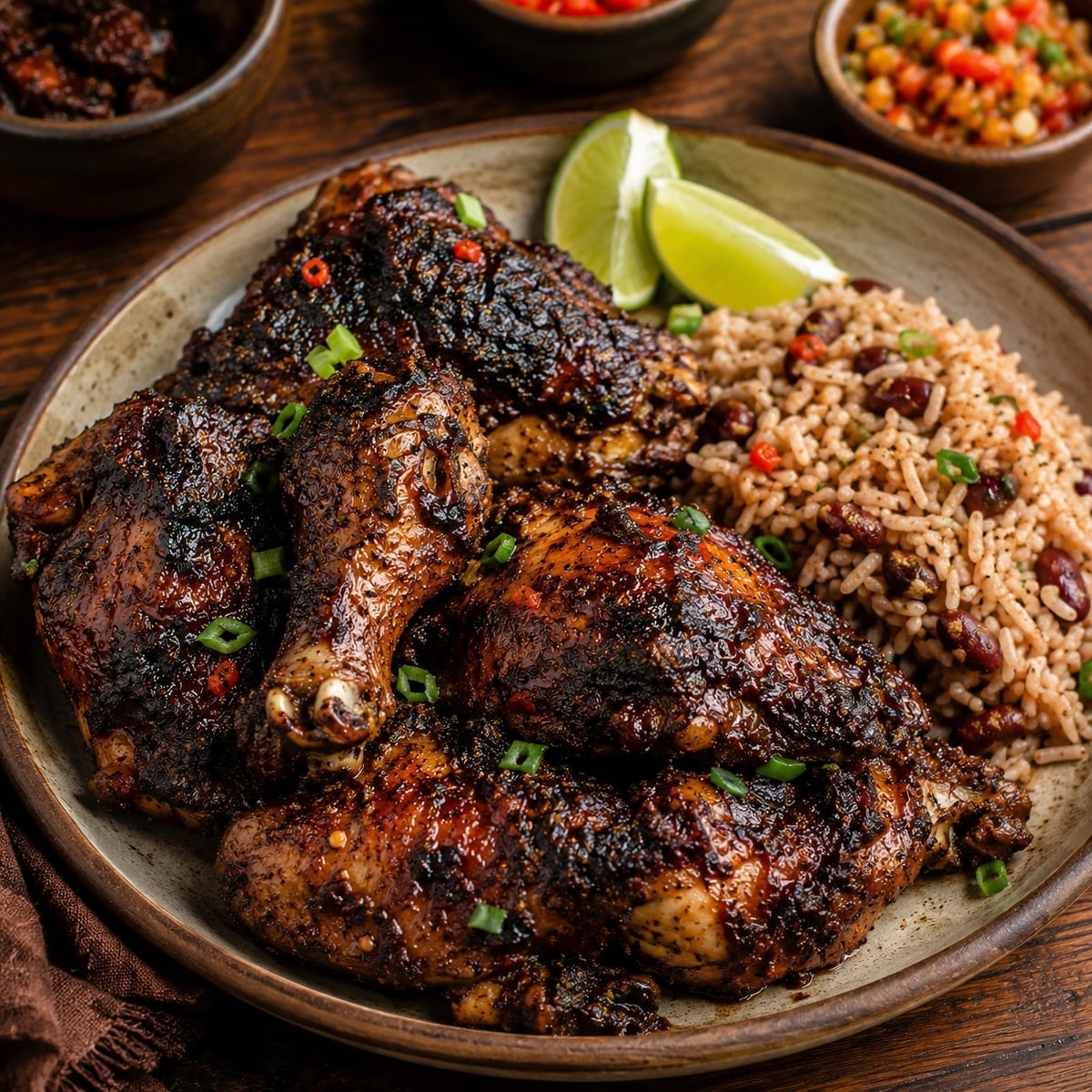
Jerk is more than a marinade — it's a centuries-old Jamaican cooking method born in the Maroon communities of the island's mountains. The magic comes from two ingredients you cannot skip: scotch bonnet peppers for heat and fruity depth, and pimento (allspice), which grows across Jamaica and gives jerk its signature warm, smoky aroma.
Ingredients
- 8 bone-in chicken thighs & drumsticks
- 2–3 scotch bonnet peppers (to taste — start with one if unsure)
- 6 scallions, chopped
- 4 cloves garlic + 1 thumb fresh ginger
- 1 tbsp fresh thyme leaves
- 2 tbsp ground pimento (allspice)
- 1 tsp ground nutmeg & 1 tsp ground cinnamon
- 2 tbsp brown sugar
- 3 tbsp soy sauce + 2 tbsp vegetable oil
- Juice of 1 lime
- 1 tsp salt & black pepper
Method
- Add all marinade ingredients (everything except the chicken) to a blender and blend to a thick, dark paste. Wear gloves when handling scotch bonnet.
- Score each piece of chicken a few times with a knife so the marinade penetrates. Rub the paste over and under the skin, into the cuts, and into a bag or bowl.
- Cover and marinate in the fridge for at least 4 hours — overnight is best for deep flavor.
- Cook over medium charcoal heat, turning often, for 35–45 minutes until charred and the juices run clear. No grill? Roast at 200°C / 400°F for 40 minutes, then finish 3 minutes under the broiler for char.
- Rest 5 minutes, then serve hot with rice and peas and festival.
🔥 Pitmaster tip
For authentic smoke, toss a handful of soaked pimento wood chips (or bay/allspice twigs) onto the coals. Traditional jerk is cooked low over pimento wood — that's the smell that stops traffic outside a Jamaican jerk pan.
Leftover marinade keeps in the fridge for a week and works beautifully on pork, fish or even roasted vegetables.
The story behind jerk
Jerk isn't just a flavor — it's survival technology turned cultural signature. When enslaved Africans escaped into Jamaica's mountainous interior in the 17th and 18th centuries, the Maroons who built free communities there needed a way to cook and preserve meat without a tell-tale plume of smoke giving away their position. They rubbed it with a fiery paste of scotch bonnet and pimento and cooked it slowly in covered pits over green pimento wood. The word "jerk" is widely thought to share a root with charqui — the same origin as "jerky" — a nod to that preserving tradition.
Two ingredients still carry the whole dish: the scotch bonnet, which brings heat and a fruity, almost tropical perfume, and pimento (allspice), a berry that grows all over Jamaica and tastes like cinnamon, clove and nutmeg rolled into one. Skip either and it stops being jerk. Everything else — thyme, scallion, ginger, brown sugar — is there to round out and deepen those two.
Ingredient notes & substitutions
- Scotch bonnet — the soul of the heat. No scotch bonnet? Habanero is the closest swap (same family, slightly less fruity). For milder heat, remove the seeds and membranes, or use one pepper instead of three.
- Pimento / allspice — non-negotiable. Whole berries you grind fresh beat pre-ground every time; toast them first for an even bigger jump in aroma.
- Fresh thyme — Jamaican cooks use it on the stalk. Dried works in a pinch (use one-third the amount) but fresh is worth it here.
- Soy sauce — adds salt and that dark, glossy color. Coconut aminos work for a soy-free version.
- Brown sugar — balances the heat and helps the skin char and caramelize. Honey or molasses can stand in.
- Chicken — bone-in, skin-on thighs and drumsticks stay juiciest. Breast works but marinate a little less and watch it so it doesn't dry out.
🔥 Pro tips for the best jerk
Score the meat so marinade reaches the bone. Marinate overnight — four hours is the floor, but 24 hours is where the magic lives. Cook over medium, not high, heat: the sugar in the marinade burns fast, so you want a slow char, not a blast. And always rest the chicken 5 minutes before serving so the juices settle.
Common mistakes to avoid
- Rushing the marinade. Thirty minutes won't do it — jerk needs hours for the flavor to penetrate.
- Cooking too hot. High heat scorches the sugar and leaves the inside raw. Medium and patient wins.
- Using tired ground allspice. Stale pre-ground pimento tastes flat. Buy whole berries and grind as you go.
- Under-salting. Between the soy and the salt, jerk should be boldly seasoned — taste your marinade before it goes on.
What to serve with jerk chicken
The classic plate pairs jerk with something cooling and something starchy to carry the heat:
- Rice and peas — coconut-rich and the traditional partner.
- Festival — sweet fried dumplings that balance the spice.
- Bammy — cassava flatbread, perfect for soaking up juices.
- Fried plantain, a crisp coleslaw, or grilled corn.
- A cold glass of sorrel to put out the fire.
Storage & reheating
Cooked jerk chicken keeps in an airtight container in the fridge for up to 4 days, and the flavor actually deepens overnight. To freeze, cool it completely and freeze for up to 3 months — or freeze a batch of the raw marinade flat in a zip bag and you're one thaw away from dinner any night. Reheat gently, covered, in a 160°C/325°F oven with a splash of water so it steams back to juicy rather than drying out. Leftovers are incredible pulled off the bone into wraps, rice bowls, or a jerk-chicken pasta.
Jerk chicken FAQ
What makes jerk chicken “jerk”?
Two things: the spice blend built around scotch bonnet and pimento (allspice), and the slow, smoky cooking method that traces back to Jamaica's Maroon communities. Without both the peppers and the pimento, it isn't truly jerk.
How do I make it less spicy?
Remove the seeds and white membrane from the scotch bonnet, or use just one pepper. You keep the signature fruity flavor with far less burn, and serving it alongside something creamy or coconut-based tames the heat further.
Can I make jerk chicken without a grill?
Yes. Roast it at 200°C/400°F for about 40 minutes, then finish 3 minutes under the broiler for char. For a smoky note, add a little smoked paprika or a few drops of liquid smoke to the marinade.
What is pimento?
Pimento is the Jamaican name for allspice — a dried berry that tastes like a blend of cinnamon, clove and nutmeg. It grows across the island and is the defining aroma of authentic jerk.
How long should I marinate the chicken?
At least 4 hours, but overnight (up to 24 hours) gives the deepest flavor. The longer it sits, the more the spice works into the meat.