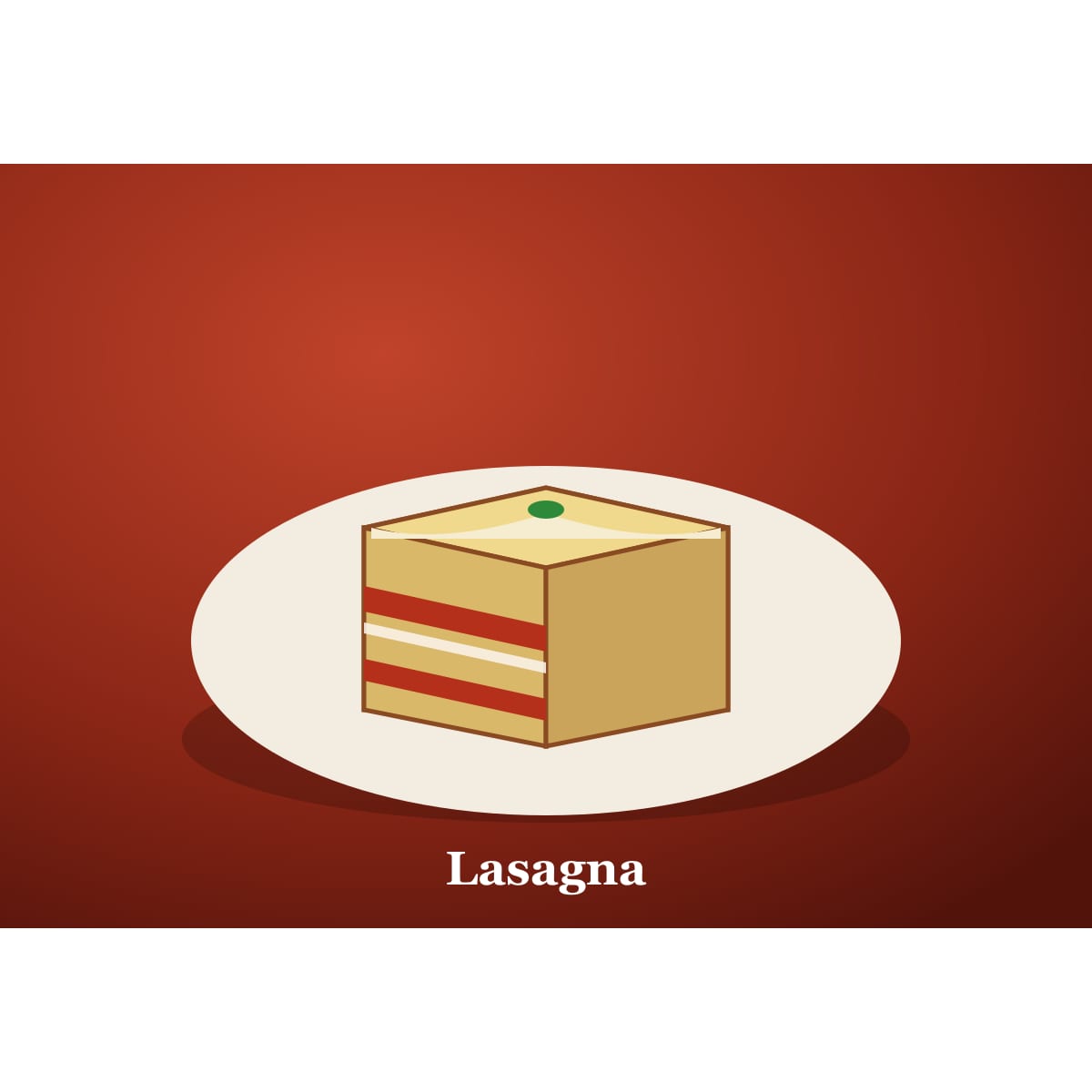
Traditional lasagna alla Bolognese is built on two sauces — a long-cooked meat ragù and a creamy béchamel — rather than ricotta. The béchamel is what gives authentic lasagna its luxurious, custardy layers. Make the ragù ahead if you can; it only gets better.
Ingredients
- Ragù: 500 g (1 lb) ground beef (or beef + pork)
- 1 onion, 1 carrot, 1 celery stalk, finely diced
- 2 cloves garlic · 2 tbsp tomato paste
- 1 can (700 g) crushed tomatoes · ½ cup red wine
- Béchamel: 60 g butter · 60 g flour · 750 ml milk · pinch nutmeg
- Lasagna pasta sheets · 100 g Parmesan, grated
Method
- Soften the onion, carrot and celery in olive oil until sweet, about 8 minutes. Add garlic, then the meat, and brown well, breaking it up.
- Stir in tomato paste, pour in the wine and let it reduce, then add the crushed tomatoes. Season and simmer gently, partly covered, for at least 1 hour until thick and rich.
- For the béchamel, melt the butter, whisk in the flour and cook 1 minute. Gradually whisk in the milk and cook until it thickly coats a spoon. Season with salt and nutmeg.
- Assemble in a baking dish: a thin layer of ragù, then pasta sheets, more ragù, a layer of béchamel, a dusting of Parmesan. Repeat until everything's used, finishing with béchamel and a generous layer of Parmesan.
- Bake at 190°C (375°F) for 35–40 minutes until bubbling and golden. Rest 15 minutes before slicing so the layers set.
🧀 Rest before you cut
Cutting straight from the oven gives you a slumping mess. Let lasagna sit 15 minutes — it firms up into clean, stackable layers.
Bologna’s layered Sunday classic
Classic lasagne alla Bolognese comes from Italy's Emilia-Romagna — layers of egg pasta, slow-cooked ragù, silky béchamel and Parmigiano, baked until bubbling and golden. It's celebration food: the dish that takes an afternoon and feeds a crowd.
The Italian original uses béchamel, not ricotta — that's the Italian-American version, and both have their fans.
Ingredient notes & substitutions
- Pasta — fresh egg lasagne sheets are traditional; dried or no-boil sheets work well.
- Ragù — a slow-simmered meat sauce (beef and pork, soffritto, tomato, a splash of milk). A good jarred sauce works in a pinch.
- Béchamel — the butter-flour-milk white sauce of the northern Italian version.
- Cheese — Parmigiano-Reggiano; add mozzarella for the American-style stretch.
🔥 Pro tips
Simmer the ragù low and long for real depth — this is where the flavour comes from. Layer thinly and evenly: pasta, ragù, béchamel, cheese, repeat, without overloading any one layer. Then let the baked lasagna rest for 15 minutes before cutting so it sets and slices cleanly instead of sliding apart.
Common mistakes to avoid
- Watery lasagna. A too-loose sauce, or cutting it straight from the oven, makes it run.
- Dry lasagna. Not enough ragù or béchamel between the layers.
- Layers too thick. Thin, even layers cook and hold together better.
- Skipping the rest. Fifteen minutes is the difference between slices and slop.
What to serve with lasagna
- A simple green salad to cut the richness.
- Garlic bread for mopping the plate.
- A glass of Italian red.
Storage & reheating
Lasagna keeps for up to 4 days in the fridge and many say it's even better reheated. It freezes brilliantly for up to 3 months, baked or unbaked — ideal for making ahead.
Lasagna FAQ
Ricotta or béchamel?
Béchamel is the traditional northern Italian layer; ricotta is the Italian-American style. Both are delicious — it comes down to preference.
Do I need to pre-cook the noodles?
Fresh sheets don't need it; dried sheets usually do unless they're 'no-boil.' Plenty of sauce helps them cook through in the oven.
Can I make lasagna ahead or freeze it?
Yes to both. Assemble ahead and refrigerate, or freeze baked or unbaked for up to 3 months.
Why is my lasagna watery?
Usually a too-loose sauce or cutting it before it rests. Reduce the sauce well and let it sit 15 minutes after baking.
How long should lasagna rest before cutting?
About 15 minutes. It firms up so you get clean slices instead of a landslide.