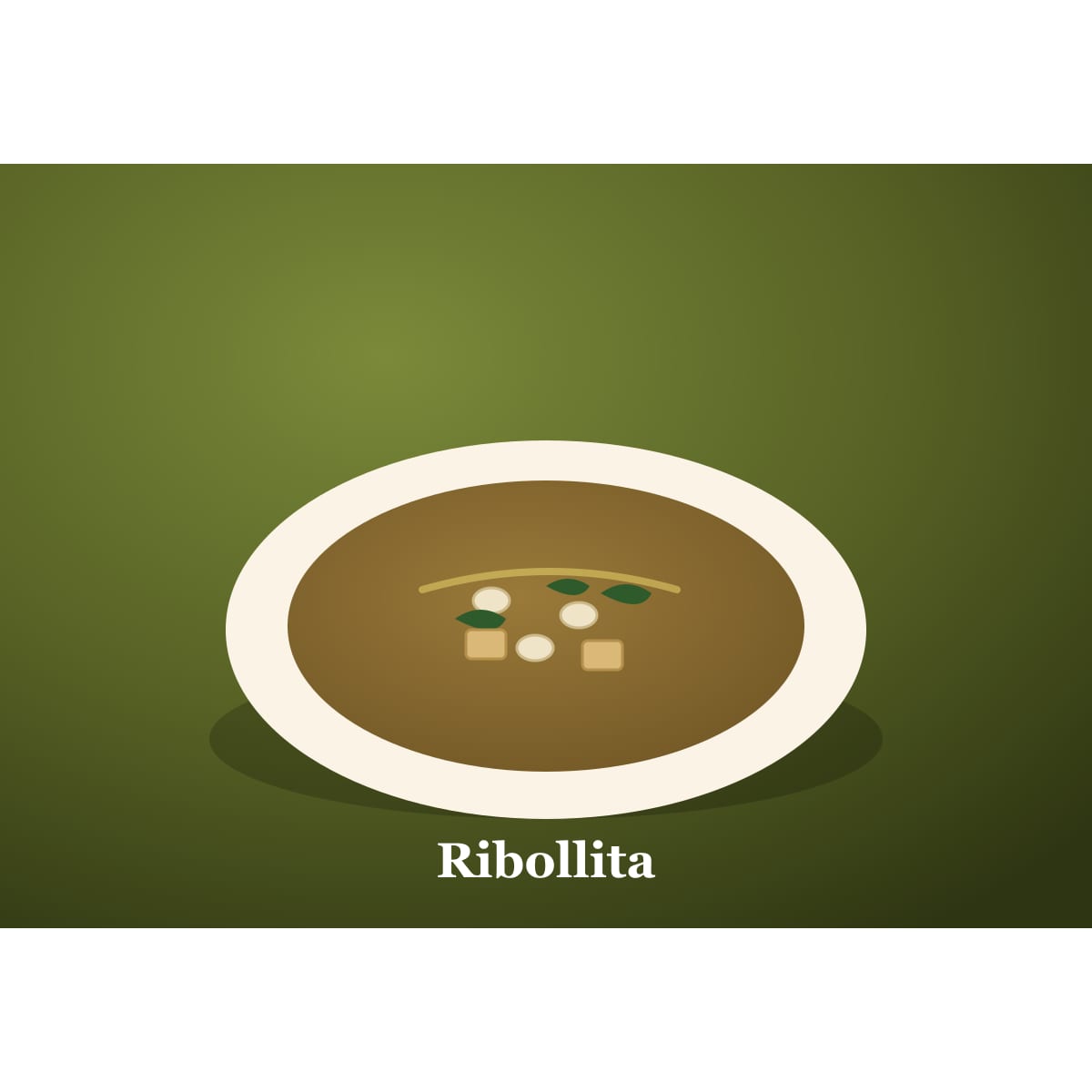
Ribollita means "reboiled" — it began as a way to stretch leftover bean soup by simmering it again with stale bread. There's no meat; the depth comes from a slow soffritto, good beans, and a Parmesan rind if you have one. Make it a day ahead and reheat — that second boil is the whole point.
Ingredients
- 400 g (2 cans) cannellini beans
- 1 bunch cavolo nero (Tuscan kale), chopped
- ½ head Savoy cabbage, shredded
- 1 onion · 2 carrots · 2 celery stalks, diced
- 3 cloves garlic · 2 tbsp tomato paste · 1 can tomatoes
- 300 g stale crusty bread, torn · 1.5 L stock
- Olive oil · rosemary · Parmesan rind (optional)
Method
- In a large pot, soften the onion, carrot, celery and garlic in plenty of olive oil with a little rosemary, about 10 minutes. Stir in the tomato paste, then the canned tomatoes.
- Blend half the beans to a purée and leave the rest whole. Add both to the pot with the cavolo nero, cabbage, stock and Parmesan rind if using. Simmer gently 40 minutes until the greens are meltingly soft.
- Stir in the torn stale bread and cook another 15–20 minutes, breaking it up, until the soup is thick and almost spoon-stands.
- Ideally cool and refrigerate overnight, then ribollire — reboil — the next day. Serve in bowls with a generous swirl of your best olive oil and black pepper.
🥖 Stale bread is the point
Don't use fresh bread — it turns gummy. Day-old crusty bread breaks down into the broth and gives ribollita its signature thick, porridge-like body.
Tuscany’s “reboiled” bread soup
Ribollita is Tuscan peasant cooking at its finest — a thick soup of cannellini beans, cavolo nero and vegetables, thickened with stale bread. The name means "reboiled," because it was traditionally made from leftover minestrone, reheated the next day with bread stirred through. Poverty food that became a classic.
It's meant to be made a day ahead. That isn't a shortcut — it's the recipe.
Ingredient notes & substitutions
- Cannellini beans — dried are best; mash some of them to thicken the pot.
- Cavolo nero (Tuscan kale) — the signature green; regular kale substitutes.
- Stale bread — crusty and day-old. This is the thickener, and it's essential.
- Soffritto — onion, carrot and celery, with garlic and tomato.
- Good olive oil — a generous drizzle to finish.
🔥 Pro tips
Use genuinely stale, crusty bread — fresh bread turns to paste. Mash some of the beans to thicken the soup naturally. And make it the day before: ribollita is meant to be reboiled, and it is dramatically better on day two. Finish every bowl with a serious glug of good olive oil.
Common mistakes to avoid
- Using fresh bread. It goes gluey instead of giving body.
- Eating it the same day. It's a next-day dish by design.
- Skimping on olive oil. The final drizzle is part of the dish.
- Too thin. Mash more beans, add more bread — ribollita should be thick.
What to serve with ribollita
- Thick, in a wide bowl, under a heavy drizzle of olive oil.
- With a robust Tuscan red.
Storage & reheating
Ribollita keeps for 4–5 days refrigerated and genuinely improves. It freezes for up to 3 months — thin it with a little water when reheating.
Ribollita FAQ
What does ribollita mean?
"Reboiled" — it was traditionally made by reheating leftover soup the next day with bread stirred in.
Do I have to use stale bread?
Yes, ideally. Stale, crusty bread gives body; fresh bread dissolves into paste.
What is cavolo nero?
Tuscan kale — a dark, sturdy leaf. Regular kale is a fine substitute.
Is it a soup or a stew?
Somewhere in between, and closer to a stew. Proper ribollita is thick enough to stand a spoon in.
Is it really better the next day?
Yes — that's the entire concept. Make it ahead and reheat it.