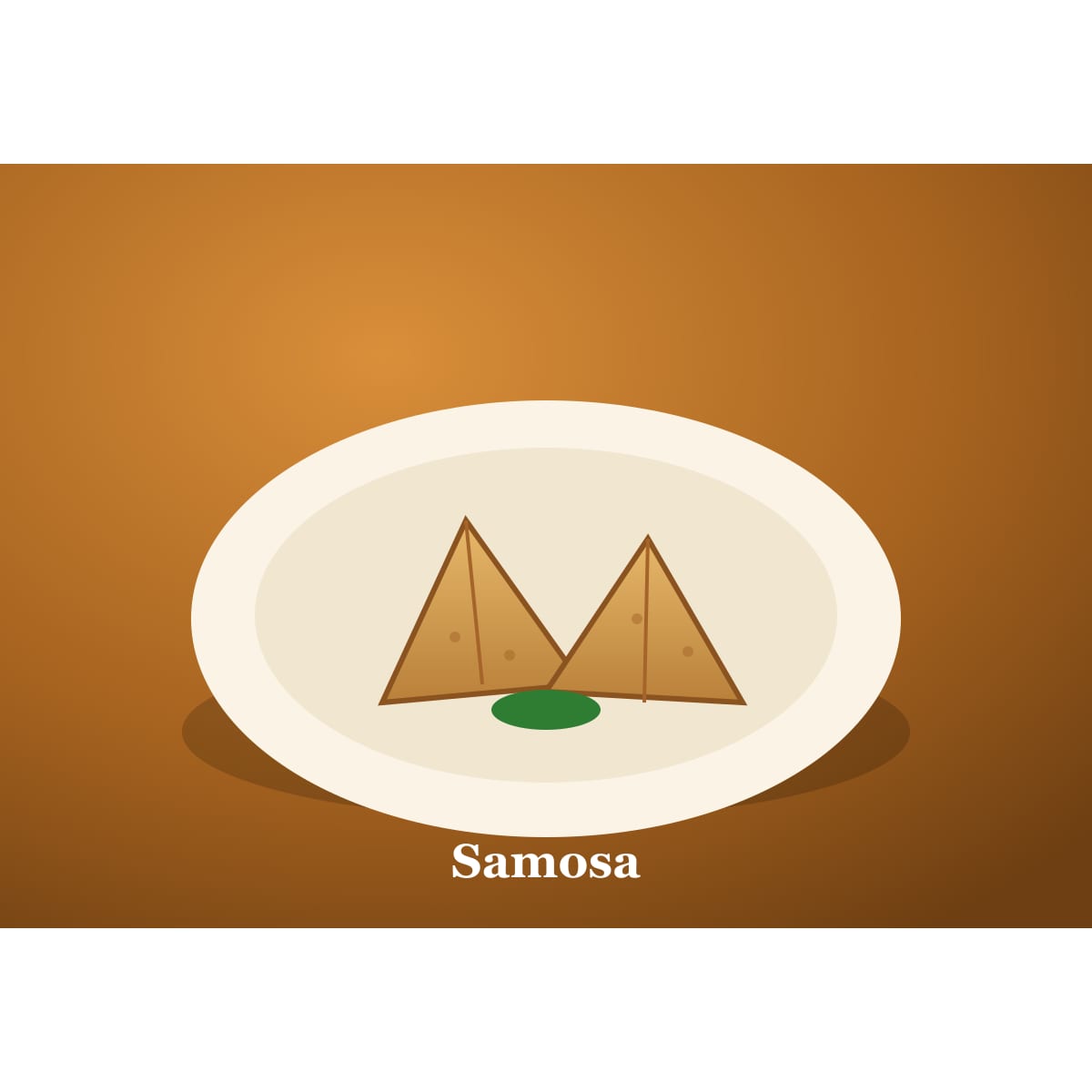
A great samosa is all about contrast: a shatteringly crisp, slightly flaky crust against a soft, warmly spiced potato filling. Two things make or break it — a stiff dough with enough fat, and frying low and slow so the shell turns glassy and bubbled rather than soft.
Ingredients
- Dough: 2 cups (250 g) all-purpose flour
- 4 tbsp oil or ghee · ½ tsp ajwain (carom) · salt · cold water
- Filling: 3 potatoes, boiled & roughly mashed
- ½ cup green peas · 1 tsp cumin seeds · 1 tsp garam masala
- 1 tsp ground coriander · 1 tsp grated ginger · 1–2 green chilies
- ½ tsp amchur (dried mango powder) · oil for frying
Method
- Rub the oil into the flour with the ajwain and salt until it clumps when pressed. Add cold water a little at a time to form a stiff, firm dough. Cover and rest 30 minutes.
- For the filling, temper cumin seeds in a little oil, add ginger and chilies, then the boiled potatoes, peas, garam masala, coriander and amchur. Season well and cool.
- Divide the dough into balls and roll each into a thin oval. Cut in half. Take one half, form a cone (seal the straight edge with water), fill with potato, and pinch the top closed firmly.
- Heat oil to a moderate 150–160°C (300–325°F) — not screaming hot. Fry the samosas slowly, turning, for 10–12 minutes until pale gold, blistered and crisp.
- Drain and serve hot with mint or tamarind chutney.
🥟 Low and slow is the secret
Fry samosas in moderately hot oil, not blazing. Too-hot oil browns the outside while the crust stays soft. A gentle fry gives you that classic glassy, bubbled shell.
The world’s favorite savory pastry
Crisp, golden and stuffed with spiced potato and peas, the samosa is one of the world's great street foods. Its roots stretch from the Middle East and Central Asia — where it began as the "sambusak" — into the Indian subcontinent centuries ago. Today it's a teatime and festival staple and a beloved snack far beyond South Asia.
The magic is in the contrast: a shatteringly crisp shell over a warm, spiced filling.
Ingredient notes & substitutions
- Pastry — a stiff flour dough (maida) with a little oil or ghee; spring-roll wrappers are a quick shortcut.
- Filling — boiled potato, peas, onion, ginger and green chilli, spiced with cumin, coriander and garam masala.
- Amchur (dried mango powder) — the tangy note that makes the filling sing.
- Optional — minced lamb or chicken for a meat samosa.
🔥 Pro tips
Keep the dough firm and rest it; a little ajwain or semolina in the dough adds crunch and flavour. Fry low and slow for the classic blistered, crisp shell — high heat gives a soft, bubbly crust instead. Seal the edges well with a flour-and-water paste so they don't burst in the oil.
Common mistakes to avoid
- Bubbly, soft crust. Fry at a lower temperature for longer to get the crisp, blistered shell.
- Bursting. Seal the edges firmly with flour paste.
- Soggy samosas. Drain well on a rack after frying.
- Bland filling. Season boldly and don't forget the amchur for tang.
What to serve with samosa
- With mint-cilantro chutney and sweet tamarind chutney.
- A cup of masala chai alongside.
- As a starter before chicken tikka masala.
Storage & reheating
Samosas are best fresh, but keep for a couple of days; re-crisp in a hot oven or air fryer. They freeze brilliantly uncooked — fry them straight from frozen so the shell stays crisp.
Samosa FAQ
Why is my samosa crust bubbly and soft?
The oil was too hot. Fry samosas at a lower temperature for longer to get the classic smooth, crisp, blistered shell.
Can I bake or air-fry samosas?
Yes, for a lighter version — brush them with oil. The texture is a little different from deep-fried but still good.
Can I freeze samosas?
Yes. Freeze them uncooked and fry straight from frozen; don't thaw first, or the pastry goes soggy.
What's the tangy spice in the filling?
Amchur, or dried mango powder, gives samosa filling its signature tang. A squeeze of lemon can stand in.
What do you serve with samosas?
Mint-cilantro and tamarind chutneys, and a hot cup of chai.