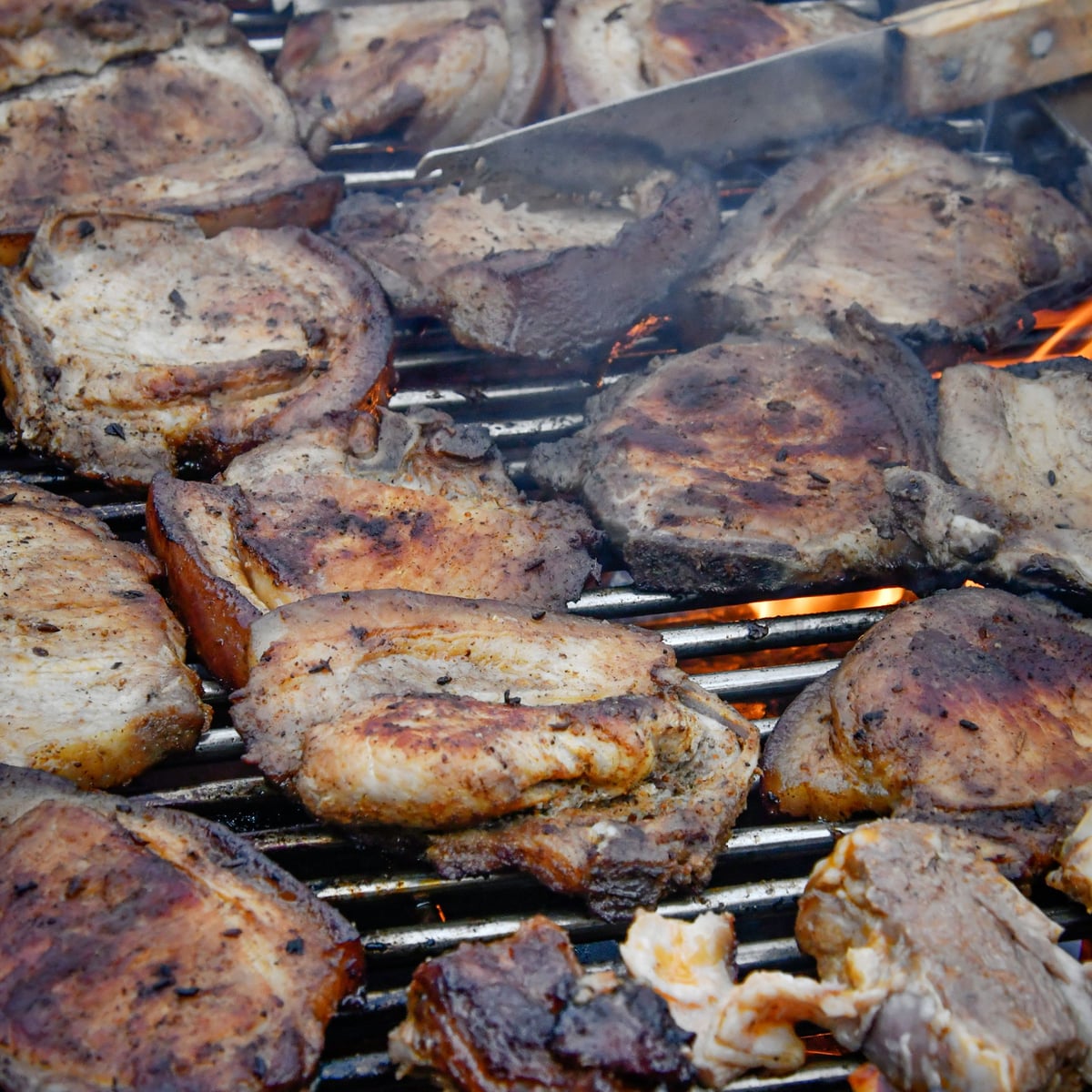
Jerk began with pork — the Maroons of Jamaica smoked wild hog over pimento wood centuries ago, and that's the root of the whole tradition. The marinade is the same fiery blend as jerk chicken, but pork shoulder's richness stands up beautifully to the heat and smoke.
Ingredients
- 3 lb pork shoulder, cut in large pieces
- 3 scotch bonnet peppers (to taste)
- 6 scallions, chopped
- 4 cloves garlic + 1 thumb ginger
- 1 tbsp fresh thyme
- 2 tbsp ground pimento
- 1 tsp nutmeg + 1 tsp cinnamon
- 2 tbsp brown sugar + 3 tbsp soy sauce
- 2 tbsp oil + juice of 1 lime
- Salt & black pepper
Method
- Blend everything except the pork into a thick, dark marinade (wear gloves for the scotch bonnet).
- Coat the pork thoroughly, getting it into every surface. Marinate in the fridge at least 4 hours — overnight is best.
- Cook low and slow over medium charcoal, turning often, for about an hour until cooked through with a good char. No grill? Roast at 180°C/350°F for an hour, then finish under the broiler for char.
- Rest 10 minutes, then chop into rough chunks the traditional way.
- Serve with festival or rice and peas, with extra jerk sauce on the side.
🔥 Low and slow
Pork shoulder rewards patience and gentle heat — too hot and it chars before it's tender. Keep the coals moderate and let the smoke do the work. Pimento wood chips take it to the next level.
The original jerk
Before jerk chicken conquered the world, there was jerk pork — the original. The Maroons of Jamaica's mountains smoked whole hogs over pimento wood in covered pits, and pork's fat and connective tissue drink up the fiery scotch-bonnet-and-pimento rub like nothing else. Along Boston Bay in Portland, the jerk-pork tradition still burns brightest.
It's smoky, spicy, a little sweet, and built for slow cooking and big gatherings.
Ingredient notes & substitutions
- Pork — shoulder (Boston butt) is ideal: fatty and forgiving over long, low heat.
- Scotch bonnet and pimento (allspice) — the twin pillars, exactly as in jerk chicken. Don't skip either.
- Thyme, scallion, ginger, garlic, brown sugar and soy — the marinade backbone.
- Pimento wood or chips — for authentic smoke; soaked bay or allspice twigs approximate it.
🔥 Pro tips
Marinate overnight if you can, four hours at minimum. Then cook low and slow — pork shoulder wants two to three hours or more to turn tender, and rushing gives you tough, dry meat. Finish over higher heat or under a broiler for char, rest it, then chop it the way jerk pork is traditionally served.
Common mistakes to avoid
- Cooking too hot and fast. Pork shoulder needs time; high heat leaves it tough.
- Under-marinating. Give it hours for the flavour to work in.
- Using a lean cut. Loin dries out — shoulder's fat is your friend here.
- Skimping on smoke. That pimento-wood aroma is half the dish.
What to serve with jerk pork
- Festival and rice and peas.
- Bammy to soak up the juices.
- A cold glass of sorrel to cool the heat.
Storage & reheating
Jerk pork keeps for up to 4 days in the fridge and freezes for up to 3 months. Reheat gently so it stays moist. Leftovers are incredible chopped into sandwiches, wraps or rice bowls.
Jerk pork FAQ
What's the difference between jerk pork and jerk chicken?
Same jerk seasoning and method — the difference is the meat. Pork shoulder is fattier and takes longer to cook, giving a richer, more traditional jerk.
What's the best cut of pork for jerk?
Pork shoulder (Boston butt). Its fat and connective tissue keep it juicy through long, slow cooking.
How long does jerk pork take to cook?
Low and slow — usually two to three hours or more for shoulder, until tender, then a hot finish for char.
Can I make jerk pork in the oven?
Yes. Roast low (around 150–160°C/300–325°F) until tender, then blast it under the broiler for char. Add liquid smoke or smoked paprika for a smoky note.
How do I get the smoky flavour?
Traditionally, pimento wood. At home, use soaked wood chips on a grill, or a little smoked paprika or liquid smoke in the marinade.