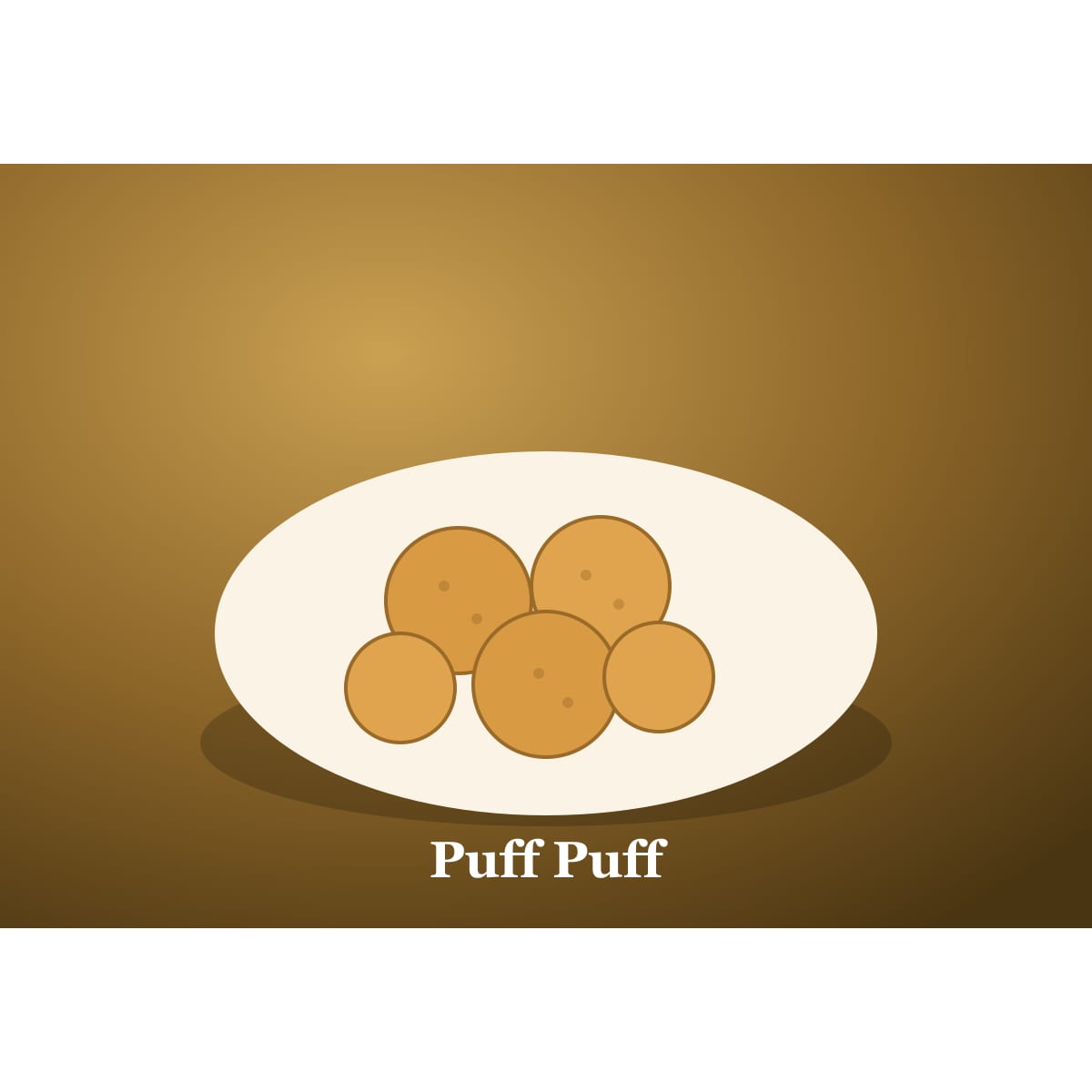
Puff puff is gloriously simple — flour, sugar, yeast and water — but the magic is in the rise and the fry temperature. A good long proof gives that signature airy, slightly chewy inside; medium-hot oil gives an even golden crust without a raw center.
Ingredients
- 2 cups all-purpose flour
- ¼ cup sugar (plus more to dust)
- 1 tsp (1 packet) instant yeast
- ½ tsp salt · ½ tsp ground nutmeg (optional)
- About 1 cup warm water
- Vegetable oil for deep frying
Method
- In a bowl, whisk together the flour, sugar, yeast, salt and nutmeg. Gradually add the warm water, mixing into a thick, sticky, scoopable batter (not a firm dough).
- Cover and set somewhere warm to rise until doubled, bubbly and risen — about 1 to 1.5 hours.
- Heat 2–3 inches of oil to medium (about 170°C / 340°F). Test with a small drop of batter — it should sizzle and float up, not brown instantly.
- Scoop up batter with your hand and squeeze a small ball out between thumb and forefinger (or use a spoon), dropping it gently into the oil. Fry in batches, turning, until deep golden all over, 4–5 minutes.
- Drain on paper towels and dust or toss with sugar. Best eaten warm.
🍩 Medium oil, not screaming hot
Too-hot oil browns the outside before the inside cooks, leaving a doughy center. Keep the oil at a steady medium so the puff puff cooks through to a fluffy middle as it turns golden.
West Africa’s golden dough balls
Puff puff is West Africa's favourite sweet snack — a yeasted dough fried into airy golden balls, crisp outside and pillowy within, often rolled in sugar. It goes by other names across the region (bofrot in Ghana, mikate in Congo) and is a fixture at parties, celebrations and roadside stalls.
The lightness comes from the rise — never rush it.
Ingredient notes & substitutions
- Flour — plain all-purpose.
- Yeast — the leavening; the dough must rise, and that's what makes it airy.
- Sugar and nutmeg — the signature flavour.
- Warm water — for a soft, sticky, batter-like dough.
- Oil — for deep frying.
🔥 Pro tips
The dough should be soft and sticky, closer to a thick batter than a bread dough. Let it rise properly — an hour or more, until doubled and visibly bubbly. Scoop with a wet hand or spoon and drop into moderately hot oil, turning so they brown evenly into deep golden spheres.
Common mistakes to avoid
- Dough too stiff. It fries dense and heavy instead of light.
- Not enough rise. Flat, tight puff puff — give the yeast time.
- Oil too hot or too cool. Too hot leaves raw centres; too cool makes them greasy.
- Crowding the pot. It drops the temperature and they soak up oil.
What to serve with puff puff
- Dusted with sugar, still warm.
- At a party alongside jollof rice.
- With a cup of tea in the afternoon.
Storage & reheating
Puff puff is best warm and fresh. It keeps a day at room temperature; refresh briefly in a hot oven. You can freeze cooked puff puff and reheat from frozen.
Puff puff FAQ
Why are my puff puff flat or dense?
The dough was too stiff, or it didn't rise long enough. It should be soft, sticky and visibly bubbly before frying.
Why are they raw inside?
The oil was too hot, so the outside browned before the middle cooked. Lower the heat and give them longer.
What's the difference between puff puff and beignets?
They're cousins — both fried yeasted dough. Puff puff is typically round, denser-crumbed and flavoured with nutmeg.
Can I make the dough ahead?
Yes — you can let it rise slowly in the fridge and fry it later. Bring it back to room temperature first.
Why are they greasy?
The oil was too cool, or you crowded the pot. Keep the temperature steady and fry in batches.