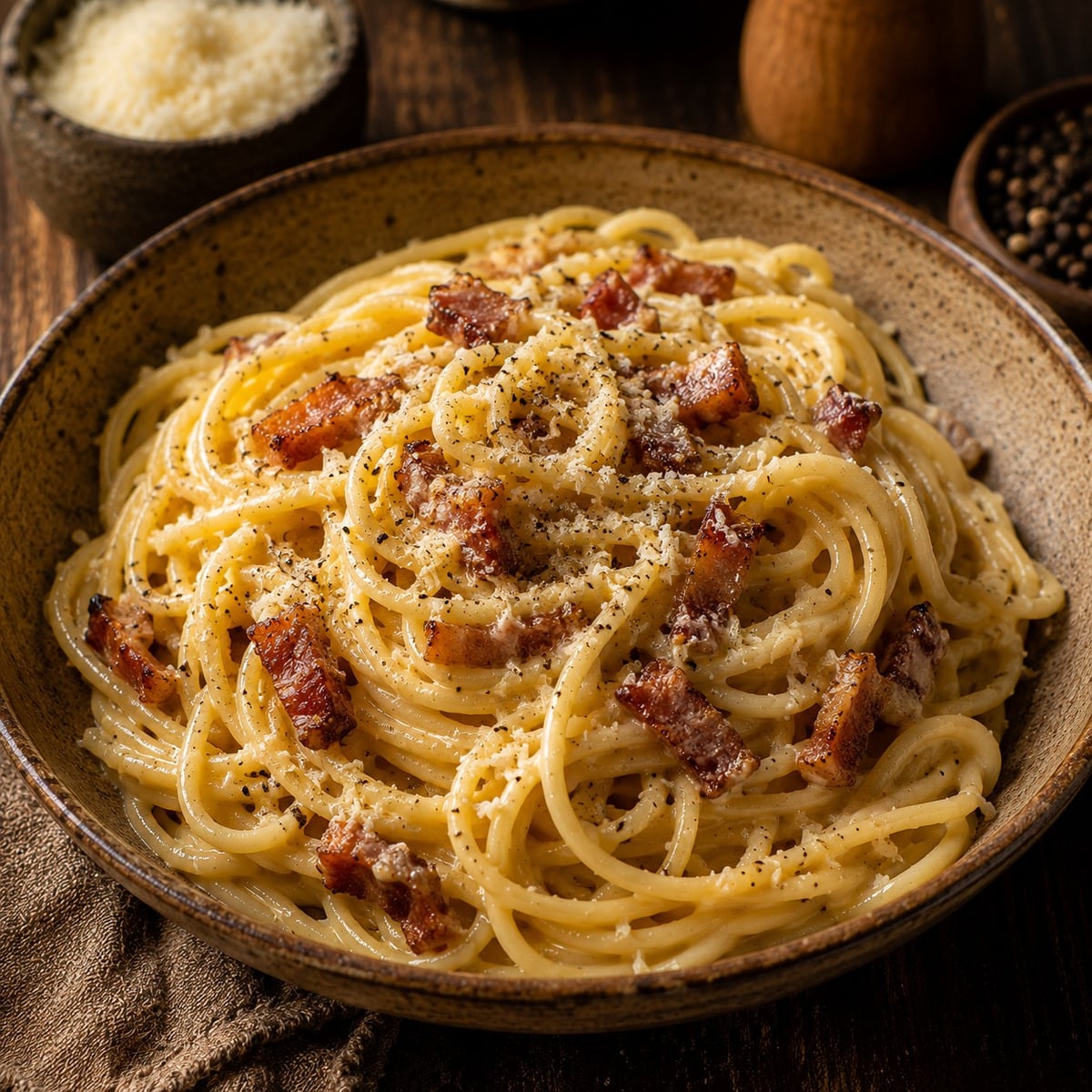
Real carbonara has no cream, no garlic, and no onion — the silk comes entirely from egg yolks emulsified with starchy pasta water and rendered pork fat. Get the technique right and it's one of the fastest great dinners on earth.
Ingredients
- 400 g (14 oz) spaghetti
- 150 g (5 oz) guanciale (or pancetta), diced
- 4 large egg yolks + 1 whole egg
- 80 g (1 cup) Pecorino Romano, finely grated
- 1 tsp freshly cracked black pepper
- Salt for the pasta water
Method
- Bring a large pot of well-salted water to a boil and cook the spaghetti until al dente. Before draining, scoop out a full cup of the starchy pasta water.
- Meanwhile, add the diced guanciale to a cold pan and set over medium heat. Let it render slowly until deeply golden and crisp, about 6–8 minutes. Turn off the heat and leave the rendered fat in the pan.
- In a bowl, whisk the egg yolks, whole egg, Pecorino and black pepper into a thick paste. Loosen it with 2–3 tablespoons of the hot pasta water — this gently warms the eggs so they won't scramble later.
- Add the hot, drained spaghetti to the guanciale pan (heat off) and toss to coat in the fat. Pour in the egg mixture and toss vigorously, adding pasta water a splash at a time, until the sauce turns glossy and coats every strand.
- Serve immediately with extra Pecorino and black pepper on top.
🍝 Keep the eggs off direct heat
The number one carbonara mistake is scrambled eggs. Always combine the egg mixture with the pasta off the burner — the residual heat of the pasta and pan is plenty. If it looks too thick, more pasta water; too loose, toss over very low heat for a few seconds.
Rome’s four-ingredient masterclass
Carbonara is Roman comfort food built on a handful of ingredients — egg, hard cheese, cured pork and black pepper — with no cream in sight. Its exact origins are argued over (post-war Rome, charcoal workers, American army rations), but what really defines it is technique: a glossy, emulsified sauce made from heat and timing, not dairy.
Master the toss and you have one of the fastest great dinners there is.
Ingredient notes & substitutions
- Pasta — spaghetti is classic; rigatoni holds the sauce beautifully. Cook it very al dente.
- Cured pork — guanciale (cured pork cheek) is traditional; pancetta is the common substitute, and bacon works in a pinch (smokier, less authentic).
- Cheese — Pecorino Romano for its sharp, salty bite; some blend in a little Parmigiano.
- Eggs — yolks (plus perhaps one whole egg) for richness. No cream, ever.
- Black pepper — lots of it, freshly cracked.
🔥 Pro tips
Render the guanciale until crisp and keep its fat. Whisk the yolks with grated pecorino and plenty of pepper. Toss the hot, drained pasta with the pork and its fat off the heat, then add the egg-cheese mix with a splash of starchy pasta water, tossing fast so it turns silky and creamy instead of scrambling. Serve at once.
Common mistakes to avoid
- Adding cream. Real carbonara gets its creaminess from egg, cheese and pasta water — not dairy.
- Scrambling the eggs. Work off the heat and use pasta water to control the temperature.
- Under-seasoning. Pecorino and black pepper carry the whole dish.
- A dry sauce. Save a mug of starchy pasta water and loosen as you toss.
What to serve with spaghetti carbonara
- A crisp green salad to cut the richness.
- Crusty bread and a glass of white wine.
- Caponata as a light antipasto to start.
Storage & reheating
Carbonara is best the moment it's made — the emulsified sauce doesn't hold well. If you must keep it, refrigerate for a day and reheat very gently with a splash of water, knowing the texture won't be quite the same as fresh.
Spaghetti carbonara FAQ
Is there cream in carbonara?
No. Authentic carbonara has no cream — the silkiness comes from egg yolks, pecorino and a little starchy pasta water.
Guanciale, pancetta or bacon?
Guanciale (cured pork cheek) is traditional and richest. Pancetta is a fine substitute; bacon works in a pinch but is smokier.
How do I stop the eggs from scrambling?
Make the sauce off the heat and add starchy pasta water as you toss to keep the temperature gentle.
What cheese should I use?
Pecorino Romano is traditional for its salty sharpness. Some cooks blend in a little Parmigiano-Reggiano.
Can I make carbonara ahead?
Not really — it's a last-minute dish. Have everything prepped, then cook and toss it just before serving.